






Trevor Bevins, Local Democracy Reporter.
Tight controls will be put in place during repairs to Dorchester’s iconic Corn Exchange building.
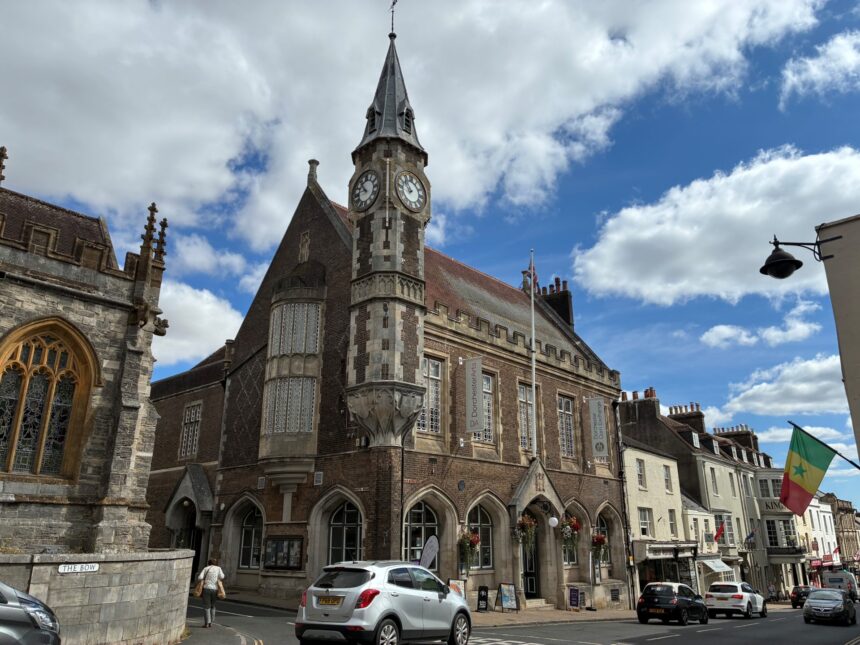
The town centre complex, owned by the Town Council and managed by Dorchester Arts, needs repairs to the lead-covered spire, decaying rafters, stonework, the clock mechanism, clock dial and bells and the bell fastenings.
All of the steps will be overseen to ensure the workmanship fits in with the existing fabric of the Grade 2 listed building – including agreement over items such as mortar mixes.
The conditions are part of the listed building consent granted by Dorset Council for the work.
The bells on the building have been silent after it was feared that to continue striking them could end in disaster with the fixings found to be unsound during a 2024 inspection. They were fitted to the newly erected clock tower, known as Galpin’s folly in 1864 – so called because people at the time thought it would not last long, the structure partly-funded by the then mayor of the town, William Galpin. The tower with its clock was an addition to the main building which was completed in 1848.
Winter weather earlier in the year has seen some small fragments of stone fall from the tower onto the pavement below.
Dorchester Town Council is unable to say how much the latest works will cost until it goes out to tender for the project which is expected to take four to five months to complete, depending on the weather. The repairs may involve the loss of some Town Hall bookings because the public hall on the first floor area will be used to gain access to the tower, with external scaffolding also likely to have to be put in place, potentially narrowing the already slim entrance to North Square from High East Street.
Since 2023/24 around £3million has been spent securing and improving the building – the county town’s main performance venue and home to the first floor Town Hall and town council chamber.
Recent changes include a new internal layout with a better bar and toilets and a new café/bar at the front of the building. The whole structure has also been re-roofed with the building covered in scaffolding for around six months for much of the latter-half of 2024, into 2025.
Said architects Crickmay Stark, acting for the town council: “Overall, the proposals represent a carefully considered programme of conservation-led repairs that will secure the long-term preservation of one of Dorchester’s most important civic buildings. By repairing rather than replacing historic fabric, retaining significant architectural features and employing traditional materials and techniques throughout, the proposals will preserve the special architectural and historic interest of the Grade II* listed building and sustain its contribution to the character and appearance of the Dorchester Conservation Area.”