
Tip: Click the icon at top right to display images in full-screen
The Community Radio Station covering Central-Southern Dorset, run by volunteers and not-for-profit









In this edition:
Mike Burks, Managing Director of the Gardens Group, explains the advantages of growing dwarf varieties of fruit trees if you only have a small garden, or a patio, since a number of them – apples, pears, cherries – can be grown very well in pots. He also explains the differences it makes to a fruit tree to prune in the winter or the summer. (And I learned a thing or two!)
Dr. Emma Phipps of the charity Songbird Survival, which funds scientific research, talks about just what two insecticides contained in pet flea treatments are doing not just to aquatic insects, but perhaps more worryingly to the adults and young of our best-loved and best-known garden birds. Along with a number of other leading conservation bodies, Songbird Survival is currently lobbying parliament to have these chemicals banned.
Kirk Hutton is a senior vet and a director of the Dorset veterinary group Friars Moor, and she explains exactly how those insecticides work and how they get from our cats and dogs into the environment via the spot-on flea treatments. But she also explains that there are safer ways to apply such treatments – such as by being injected.
And Andy Worth has been speaking to several representatives of organisations who were exhibitors at last month’s World Heritage Day and Jurassic Coast at 25 event in the Dorset Museum.
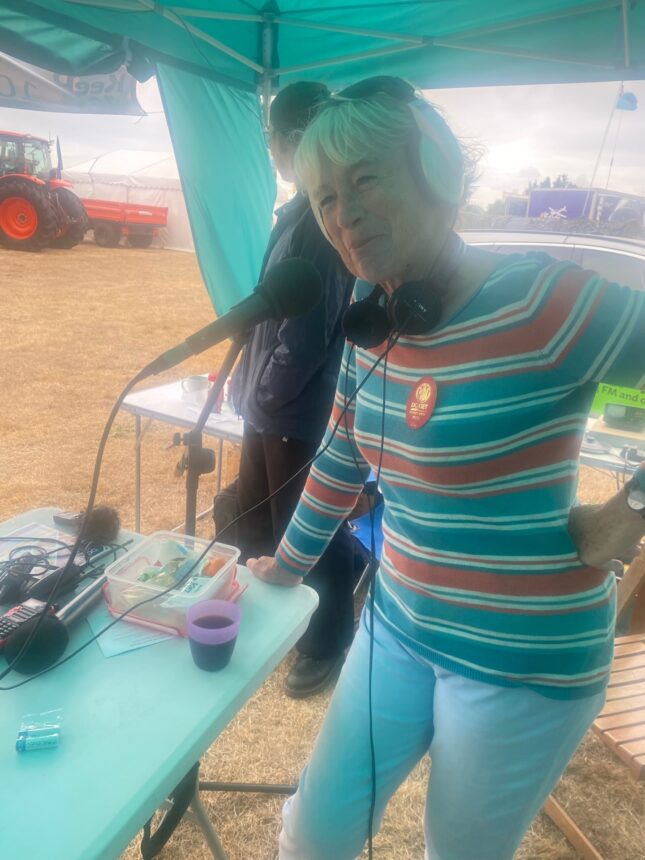
Presented by Jenny Devitt
Who we are
Our website address is: http://www.keep106.com. Keep 106 is the broadcasting name of Ridgeway Community Radio CIC (Community Interest Company) registered at Companies House.
Our postal address is: Ridgeway Community Radio, The Little Keep, Barrack Road, Dorchester, Dorset DT1 1SQ
What data we collect and why we collect it:
Contact form
The contact forms are purely for site visitors' convenience. When a visitor fills in the form and clicks Submit the contents of the form are sent to us in an email. The contact information which the visitor has submitted is used so that we can reply to them. This also applies to occasional competition forms.
We will not engage in email marketing to individuals but may email companies with offers to advertise on or sponsor our radio programmes.
If you use our self-service form for submitting events to the Local Events Diary on our ‘What’s On’ page, you will normally supply your organisation name or personal name, together with a contact email address, phone number and the location of the event. These details are required purely for the convenience of our visitors and to publicise your event free of charge. After the event has taken place and the listing has expired the details are deleted. We do not retain the details for any reason.
Other non-personal information which is collected:
Analytics
We use Google Analytics which registers a unique ID that is used to generate statistical data on how the visitor uses the website. Also, data is sent to Google Analytics about the visitor's device and behaviour, and tracks the visitor across devices and marketing channels.
Cookies
We use cookies to provide social media features and to analyse our traffic. We also share information about your use of our site with our social media and analytics partners who may combine it with other information that you’ve provided to them or that they’ve collected from your use of their services. You consent to our cookies if you continue to use our website.
If you wish to change your cookie preferences select a category on the left and either enable or disable it.
Listening online
If you listen to our station online - for example, via our web player, the Tunein app (or any other app which lists KeeP 106) or on a smart speaker - your IP address and approximate location (e.g. town or city) is shown to us. Amongst other non-personal statistics, the streaming system records the maximum number of simultaneous listeners during any specific period, e.g. a year quarter. We are required to submit this information to the music licencing organisations. We don't collect any other information.
Linked or embedded content from other websites
Some of our ‘Listen Again’ audio material is hosted by Mixcloud which is clearly shown on individual players where appropriate. When you listen to one of these audio items Mixcloud records that you have clicked the play button and also your approximate location (town or city).
Material on this site may include linked or embedded content (e.g. Google Calendar, Google Maps, videos, images, articles, etc.). Some material may contain links to external websites which, when clicked on, will open a different website. These websites may collect data about you, use cookies, embed additional third-party tracking, and monitor your interaction with that embedded content, including tracking your interaction with the embedded content if you have an account and are logged in to that website. Please refer to the privacy policies of these external websites for more information.
Please note, we provide links to other websites as a service to the community. We believe these external websites will be useful to our listeners and web visitors. However, you visit these websites at your own risk - KeeP 106 accepts no responsibility for them.
This is a necessary category.
This is a non-necessary category.